Neuron / 4DSKY Selected for NATO DIANA 2026 Challenge Programme

Company to advance resilient, secure edge communication and autonomous coordination for contested environments
17 December 2025 — Neuron today announced it has been selected from a global pool of more than 3,600 applicants to join the NATO Defence Innovation Accelerator for the North Atlantic (DIANA) 2026 Challenge Programme. Neuron’s entry — Secure Edge Infrastructure for Autonomous Communication and AI Coordination — will enter DIANA’s Accelerator (Core) Programme, where it will be strengthened and adapted for defence and dual-use environments.
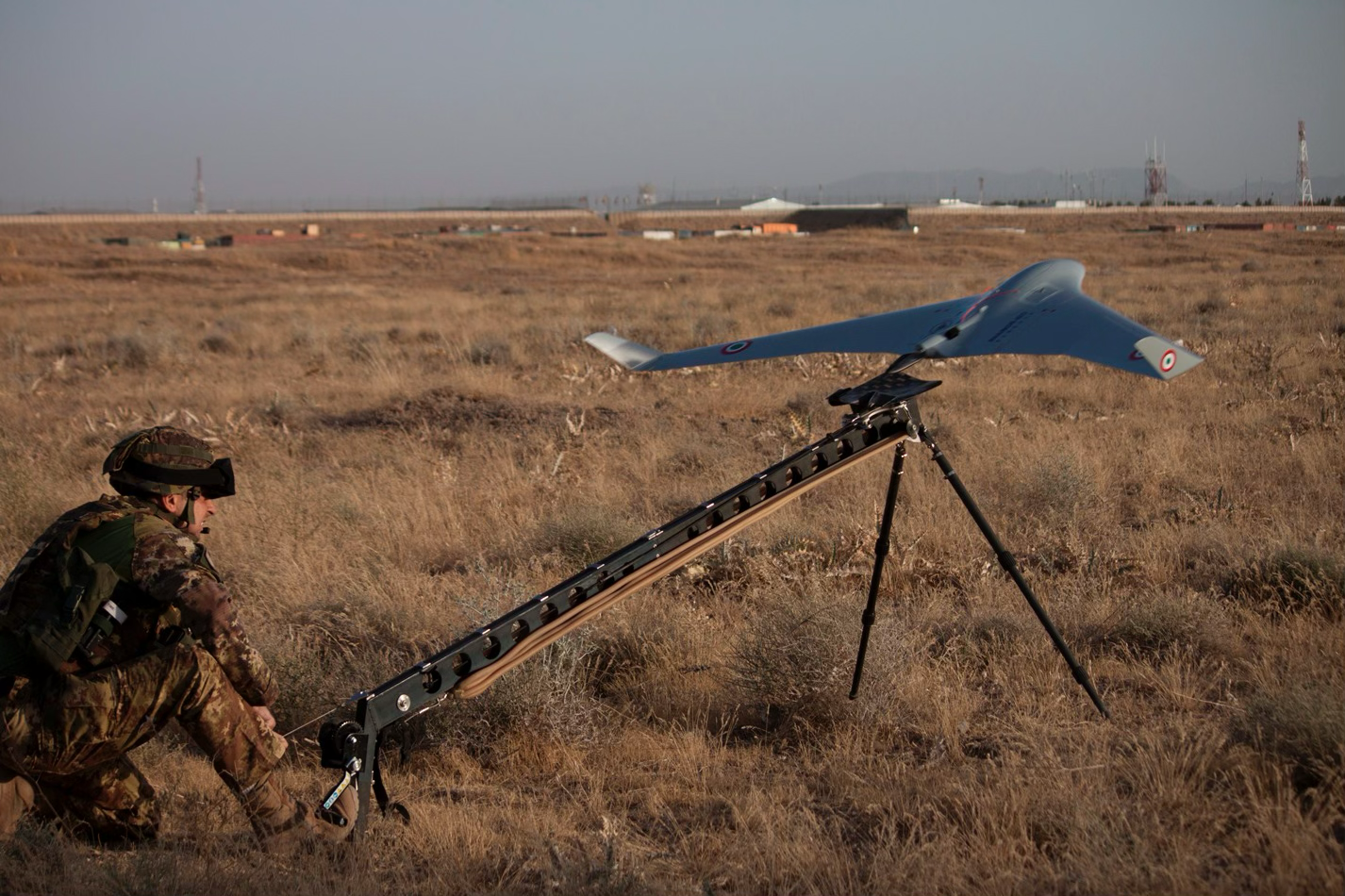
Neuron provides a decentralised, secure and programmable communication layer built for distributed operations in Degraded, Denied, Intermittent and Limited (DDIL) environments. The company’s protocol enables autonomous systems, sensors, radios and edge devices to discover and coordinate with each other reliably, without dependence on centralised infrastructure. Neuron’s approach has already been demonstrated in live aviation-surveillance deployments through the company’s 4DSKY platform, showing high-volume, low-latency peer-to-peer data exchange across fragmented networks. Joining DIANA will accelerate hardening and validation of these capabilities for contested military settings, coalition ISR coordination and resilient multi-agent automation.
Selected under the Secure Edge Infrastructure for Autonomous Communication and AI Coordination challenge area, Neuron addresses key defence needs including network resilience, autonomous discovery, secure policy-enforced coordination and coalition data exchange. The company’s architecture combines a secure edge orchestration layer — which enforces discovery and policy — with an application layer powered by the Node Builder and SDK for rapid mission-logic development. This design enables resilient, scalable communication between autonomous agents, sensors and drones while preserving operational security and data governance.
“Being selected from over 3,600 applicants is a testament to the importance of resilient edge communication for the future of defence and autonomy,” said James Dunthorne, CEO of Neuron. “DIANA’s network, expertise and test environments will help us accelerate transition of our technology into operational use while strengthening its dual-use applications, including 4DSKY.”
Over the coming six months Neuron will work with its assigned DIANA accelerator site, mentors and test centres to mature autonomous coordination across heterogeneous edge devices, strengthen DDIL performance, and broaden secure peer-to-peer workflows for ISR, logistics and multi-agent mission automation. Key programme milestones include deployment of the Node Builder for rapid mission-logic creation, validation of policy-enforced discovery across drones, sensors and radios, integration of coalition data-exchange workflows, and field validation of infrastructure-independent communication patterns in realistic, contested environments.
4DSKY and dual-use impact
Neuron’s participation in DIANA will also accelerate the evolution of 4DSKY, Neuron’s aviation-surveillance and situational-awareness platform. DIANA-driven advances in decentralised discovery, resilient coordination, and security will enhance 4DSKY’s multi-sensor fusion, increase its robustness in degraded networks, and raise assurance for safety-critical workflows — strengthening the platform’s utility across civil and defence applications where dependable situational awareness is essential.
Why Hedera matters
Distributed, decentralised systems must couple resilient networking with verifiable data integrity and scalable consensus. Hedera (the Hedera public ledger) is important in this context because it provides a high-throughput, low-latency consensus layer with strong finality and a governance model designed for enterprise reliability. For architectures that require tamper-evident audit trails, cryptographic proofs of state and efficient tokenisation of identities or policies, Hedera offers an enterprise-grade ledger with predictable performance and low energy cost. This makes Hedera an attractive building block for projects that combine peer-to-peer coordination with auditable, distributed records — for both trusted coalition operations and accountable dual-use deployments.
About Neuron / 4DSKY
Neuron delivers a decentralised, secure and programmable communication layer designed for distributed operations in DDIL environments. The solution enables autonomous systems, sensors, radios and edge devices to coordinate reliably without relying on centralised infrastructure. Proven in live aviation surveillance through 4DSKY, Neuron’s protocol supports high-volume, low-latency peer-to-peer data exchange across fragmented networks. Neuron’s Node Builder and SDK simplify rapid development of mission workflows, enabling resilient, policy-enforced coordination for ISR, logistics and multi-agent automation.
About NATO DIANA
NATO DIANA finds and accelerates cutting-edge, dual-use technologies to deliver battle-winning defence and security solutions for the Alliance while fostering deep-tech innovation. As a cornerstone of NATO’s innovation and technology strategy, DIANA brings together world-class talent and the latest advancements to maintain the Alliance’s technological edge. Leveraging a network of leading accelerator sites, test centres, expert mentors and Allied expertise across 32 nations, DIANA empowers innovators working at the intersection of defence readiness, commercial potential and technological breakthroughs.
About HBAR, Inc., a subsidiary of Hedera Foundation SEZC
HBAR, Inc. operates to support the Hedera Foundation. The Hedera Foundation's mission is to accelerate the development, impact, and adoption of the Hedera network by empowering innovators across tokenization, DeFi, AI, and sustainability and by providing funding, expertise, and ecosystem support to developers, startups, and enterprises. Together, they drive innovation, awareness, and sustainable growth across the Hedera ecosystem.
Media enquiries
For DIANA media enquiries: press@diana.nato.int For Neuron/4DSKY media enquiries: gedeon.drapak@neuron.world